
Anterior Pelvic Tilt & Lower Cross Syndrome: How To Fix

Key Takeaways
Lower cross syndrome is a common posture pattern. The hip flexors and lower back get tight and overactive while the glutes and deep core get weak.
This imbalance tilts the pelvis forward and deepens the curve in the low back. That often leads to low back pain, tight hips, and stiff movement.
Long hours of sitting are the biggest cause. Desk workers, long-distance drivers, and less active retirees are all at higher risk.
The fix is a balanced routine. You stretch the tight muscles and strengthen the weak ones, which is why the six exercises below come in matched pairs.
Chiropractic care can help by restoring joint motion, checking your movement patterns, and guiding the right exercises for your body.
These exercises are general education, not a personal treatment plan. If you have pain, get checked before starting.
What Is Lower Cross Syndrome?
If your low back feels tight after a long day at a desk, or your hips feel locked up when you stand after a drive down I-75, there may be a pattern behind it. That pattern has a name.
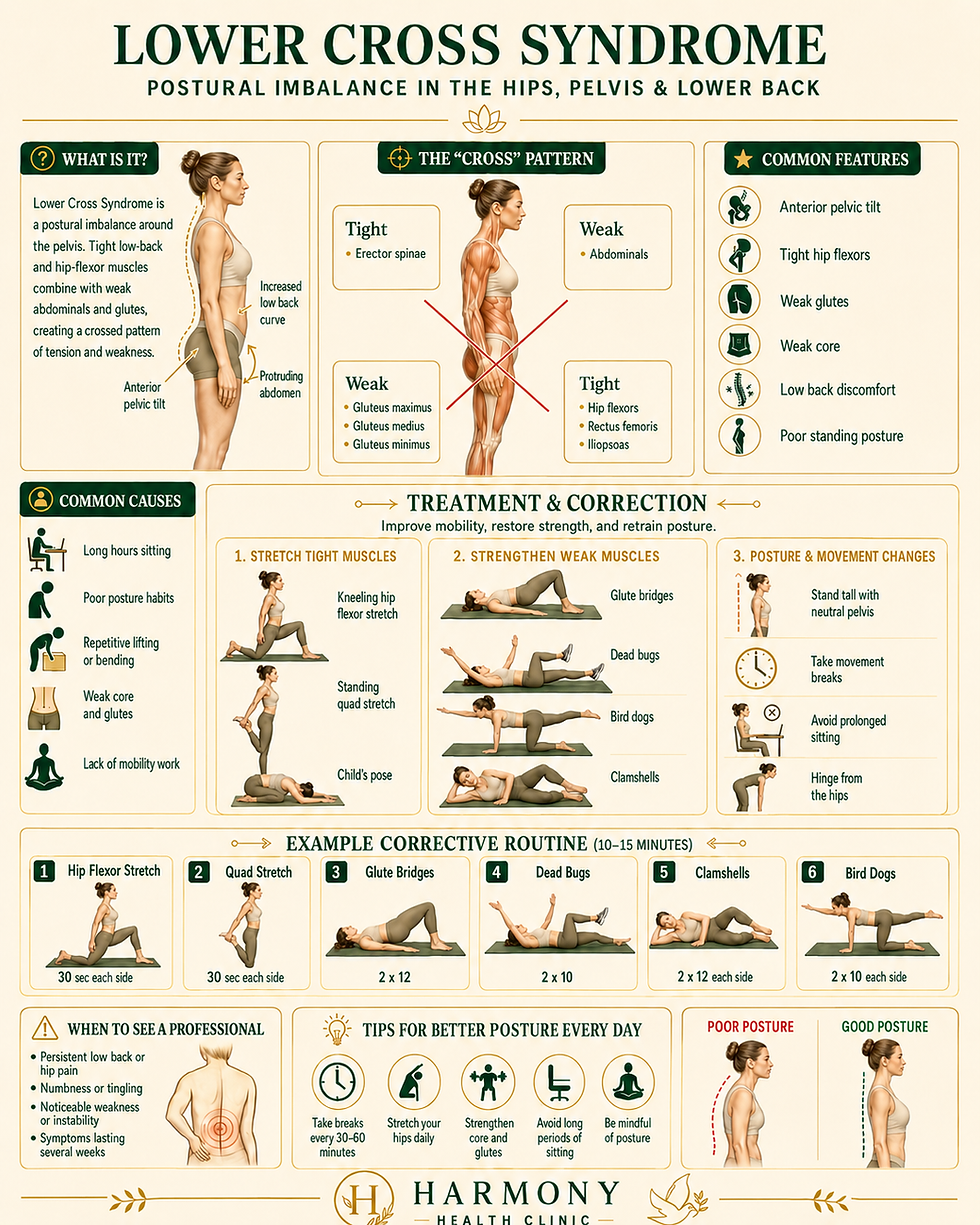
Lower cross syndrome is a common muscle imbalance around the hips, pelvis, and low back. Some muscles get short and tight. Their opposite muscles get long and weak. When you draw lines between the tight and weak groups, they form an X, or a cross, which is where the name comes from.
The idea was first described by Dr. Vladimir Janda, a rehabilitation doctor, back in the 1970s. According to Physiopedia, the tight and overactive muscles are the hip flexors (the muscles at the front of your hips) and the lumbar extensors (the muscles that run up your lower back). The weak and underactive muscles are the glutes (your buttocks) and the deep abdominal muscles that make up your core.
Here is a self-contained way to picture it. Lower cross syndrome is a posture pattern where tight hip flexors and a tight lower back pull the top of the pelvis forward, while weak glutes and a weak core fail to pull it back into place. The result is a pelvis that tips forward and a lower back that arches more than it should.
That forward tip has its own name too. It is called an anterior pelvic tilt, and it is the visible sign most people notice first.
What Causes Lower Cross Syndrome?
The short answer is sitting. Modern life keeps us in chairs, and chairs are hard on the hips.
Self-reported sitting time for U.S. adults has climbed to roughly six and a half hours a day, and for many people the real number is higher. When you sit, your hip flexors stay in a short, bent position for hours. Muscles that stay short tend to get tight. At the same time, your glutes are switched off and doing nothing. Muscles that do nothing tend to get weak.
Do that for years and your body learns the pattern. The tight hip flexors and the sleepy glutes become your new normal, even when you stand up. Sitting is not the only cause. Weak core habits, old injuries, and low overall activity all add to it. But if you want one thing to blame, blame the chair. A few groups in Southwest Florida are especially prone to this:
Desk and remote workers. Long stretches at a computer keep the hips flexed all day.
Long-distance and commercial drivers. Truck drivers spend most of their day seated. If you drive for a living and come in for a CDL or DOT physical, this pattern is one we see often.
Snowbirds and retirees. The long drive down from up north, followed by relaxed days, can stiffen the hips. Less daily activity also means weaker glutes over time. Our chiropractic care for seniors often starts here.
Golfers and pickleball players. Naples is a golf and pickleball town. Tight hips and a forward-tilted pelvis can limit your rotation and rob power from your swing or your lunge.
What Are the Symptoms of Lower Cross Syndrome?
The most common complaint is low back pain. This matters, because low back pain is not a small problem. It is the leading cause of disability in the world, affecting an estimated 619 million people in 2020, with that number expected to keep climbing as the population ages. Beyond the ache in your low back, lower cross syndrome can show up as:
A lower back that looks more arched than normal, with the belly and buttocks pushed out
Tight, stiff hips, especially after sitting or driving
Tight hamstrings that never seem to loosen no matter how much you stretch
A feeling that your core is weak or that your posture "falls apart" when you are tired
Discomfort that gets worse after long periods of sitting or standing
Because the pelvis and low back sit at the center of your body, this imbalance can ripple outward. It is linked with joint strain in the low back and hip and can play a role in conditions like sciatica and ongoing muscle tension and spasms. It is also the lower-body cousin of tech neck and upper body posture problems, which follow the same tight-and-weak pattern higher up.
How Do You Fix Lower Cross Syndrome?
Here is the good news. Because the pattern is trained, it can be retrained.
The plan is simple to say and takes patience to do. You stretch and relax the muscles that are too tight. You strengthen the muscles that are too weak. Do both together and the pelvis can settle back into a better position.
A 2026 randomized trial published in PLOS One found that eight weeks of corrective exercise reduced the lumbar curve angle and improved muscle activity in women with lower cross syndrome. That fits what movement specialists have taught for years, going back to Dr. Janda's original framework: release the tight, wake up the weak.
The seven exercises below are grouped to do exactly that. Two of them loosen the tight muscles. Four of them strengthen the weak ones and teach your core and glutes to hold your pelvis steady.

7 Exercises for Lower Cross Syndrome
A quick note before you begin. These are general examples that many people find helpful, not a personal prescription. Move slowly, breathe, and stop if anything hurts. If you already have back or hip pain, it is smart to get checked first so your routine fits your body.
1. Kneeling Hip Flexor Stretch (loosen the tight)

Kneel on one knee with the other foot flat in front of you, like a marriage proposal. Tuck your tailbone under and gently press your hips forward until you feel a stretch across the front of the back hip. Keep your chest tall. This targets the tight hip flexors that pull your pelvis forward. Hold gently and breathe, then switch sides.
2. Glute Bridge (strengthen the weak)
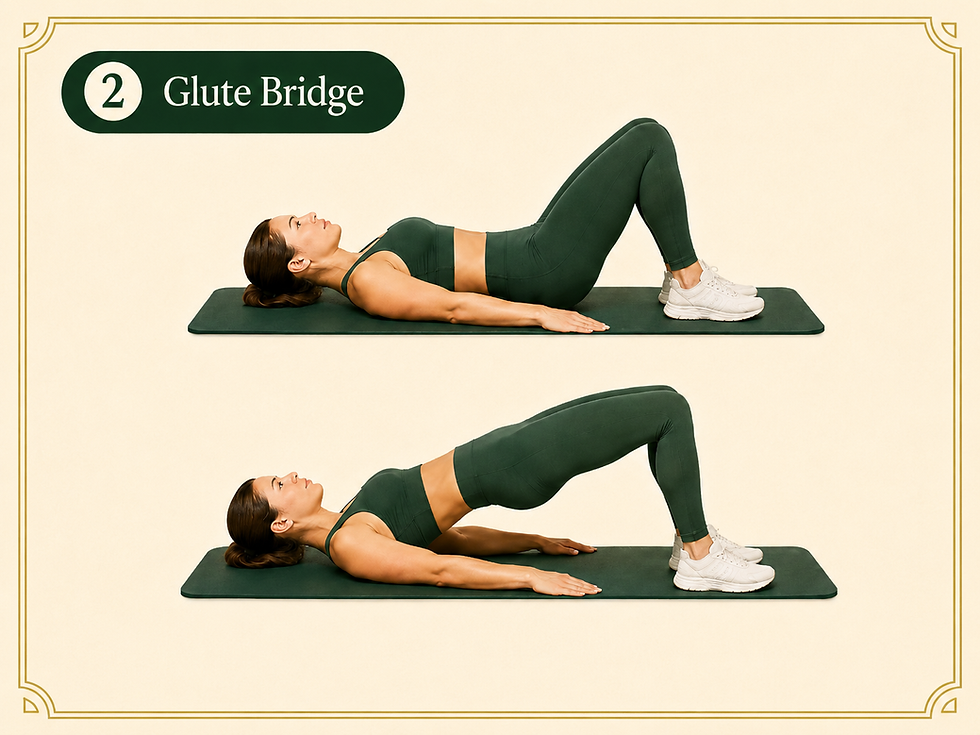
Lie on your back with your knees bent and feet flat on the floor. Squeeze your buttocks and lift your hips toward the ceiling until your body forms a straight line from knees to shoulders. Pause at the top, then lower slowly. This is one of the best ways to wake up sleepy glutes, the muscles that should be helping hold your pelvis in place.
3. Dead Bug (strengthen the weak)

Lie on your back with your arms reaching toward the ceiling and your knees bent up over your hips. Slowly lower one arm overhead and the opposite leg toward the floor while keeping your low back gently pressed down. Return and switch sides. This trains the deep core to stay stable while your arms and legs move, which is exactly what a forward-tilted pelvis needs.
4. Bird Dog (strengthen the weak)

Back on your hands and knees, reach one arm forward and the opposite leg straight back at the same time. Keep your hips level and your core tight so your low back does not sag. Hold briefly, then switch sides. Bird dog links the core and glutes together and teaches them to work as a team to steady your spine.
5. Clamshells (strengthen the weak)

Lie on your side with your knees bent and your feet stacked together. Keep your hips stacked and your pelvis still. Slowly lift your top knee upward while keeping your feet touching, then lower it back down with control. Avoid rolling your pelvis backward as you move. This exercise helps strengthen the gluteus medius and gluteus minimus, which support hip stability and help keep the pelvis from tipping forward.
6. Front Plank (strengthen the weak)

Rest on your forearms and toes with your body in a straight line from head to heels. Squeeze your glutes and pull your belly button in so your hips do not sag or pop up. Hold for a comfortable count while breathing steadily. The plank builds the core endurance that keeps your pelvis from tipping forward as the day wears on.
7. Cat-Cow (loosen the tight and wake up awareness)

Start on your hands and knees. Slowly round your back toward the ceiling, then let it dip as you lift your head and tailbone. Move with your breath. This gentle motion loosens a stiff lower back and teaches you to feel the difference between an arched and a neutral spine, which is the awareness you need to hold better posture.
Consistency beats intensity here. A short, regular routine will do far more than one hard session, and progress usually shows up over weeks, not days.
Can a Chiropractor Help With Lower Cross Syndrome?
Yes, and it often works best as part of the picture rather than the whole picture.
The mainstream medical view supports this approach. The American College of Physicians recommends non-drug options like spinal manipulation and exercise as first-line care for low back pain, before medication. That lines up well with how we treat posture-related back pain.
At Harmony Health Clinic, care for lower cross syndrome usually blends a few things. We assess how your spine, hips, and pelvis move. We use chiropractic adjustments to restore motion where joints have gotten stiff. Then we guide you on the stretches and strengthening moves that fit your body, so the muscle imbalance actually changes instead of coming right back.
Adjustments and exercise support each other. Restoring joint motion can make it easier to activate the right muscles, and stronger muscles help hold those gains. If you are wondering how often care like this is needed, we cover that in our guide on how often you may need chiropractic adjustments.
Because Harmony Health Clinic also practices functional medicine, we look at the whole picture too, including the daily habits and activity levels that feed the pattern in the first place. Fixing posture is not just about the hour on the table. It is about the twenty-three hours off it.
The Naples Connection
Southwest Florida has a lifestyle that can quietly build this pattern. Snowbird season means long drives and relaxed days. Retirement in Pelican Bay or Old Naples can mean less daily movement than the working years did. And the golf and pickleball that make Naples great also reward loose hips and a strong core, the very things lower cross syndrome takes away.
The upside is that the same active, outdoor lifestyle gives you plenty of chances to move well. A few minutes of the exercises above, a habit of standing up during long drives, and care when you need it can keep your low back doing its job on the course, on the court, and on the beach.
Frequently Asked Questions
What is lower cross syndrome?
Lower cross syndrome is a common posture pattern where the hip flexors and lower back muscles become tight and overactive while the glutes and deep core muscles become weak. This imbalance tilts the pelvis forward, deepens the curve in the low back, and often leads to low back or hip discomfort.
What causes lower cross syndrome?
Long hours of sitting are the most common driver. When you sit, the hip flexors stay short and the glutes switch off. Over time this trains a muscle imbalance. Desk work, long commutes, driving for a living, and low activity levels all raise the risk, and the pattern builds slowly rather than overnight.
What are the symptoms of lower cross syndrome?
The most common signs are a dull ache in the low back, tight hips, and a visibly arched lower back with the belly and buttocks pushed out. Some people also notice hip stiffness, tight hamstrings, or discomfort that gets worse after long sitting or standing. Symptoms vary from person to person.
What exercises help lower cross syndrome?
A balanced routine loosens the tight muscles and wakes up the weak ones. Common examples include the kneeling hip flexor stretch, glute bridge, dead bug, bird dog, front plank, and cat-cow. The goal is to stretch the hip flexors and low back while strengthening the glutes and deep core.
Can a chiropractor help with lower cross syndrome?
Yes. A chiropractor can assess your posture and movement, work to restore joint motion in the spine, hips, and pelvis, and guide you on the stretches and exercises that fit your body. Care is individualized, and combining hands-on treatment with corrective movement usually works better than either one alone.
Book an Evaluation in Naples
If tight hips and a nagging low back sound familiar, you do not have to guess at the cause. A hands-on evaluation can tell you whether lower cross syndrome is part of your story and what to do about it.
Learn more on our lower cross syndrome condition page, or book an appointment at Harmony Health Clinic in Naples to get a plan built for your body.
Disclaimer: This article is for informational purposes only and does not constitute medical advice. Always consult with a licensed healthcare professional for diagnosis and treatment.


