
Body Sculpting vs. Weight Loss: What Actually Gets You the Results You Want

Key Takeaways
Body sculpting (like ultrasonic cavitation/Cavi-Lipo) reshapes stubborn fat pockets in patients who are already near their goal weight; it is not a weight-loss treatment.
Medical weight loss programs address the metabolic, hormonal, and lifestyle factors that drive overall fat gain, often using tools like GLP-1 medications, lab testing, and nutrition coaching.
According to Harvard Health, GLP-1 medications can help patients lose a clinically significant percentage of body weight when combined with lifestyle changes.
The FDA classifies non-invasive body contouring devices separately from weight-loss treatments because they target localized fat, not systemic weight.
Many Naples patients get the best results by sequencing care: medical weight loss first to reach a stable weight, then body sculpting to refine stubborn areas that don't respond to diet and exercise alone.
Humidity, snowbird travel schedules, and Gulf Coast beach season all shape when Collier County patients choose one path over the other.
Harmony Health Clinic in Naples builds a plan around your labs, your goals, and your timeline rather than a one-size-fits-all package.
Trying to Decide Between Two Very Different Treatments?
If you've searched "body sculpting vs weight loss," you're probably standing in front of a mirror wondering why nothing you try seems to touch that one stubborn area, even though the number on the scale has barely moved either. You are not alone. It's one of the most common points of confusion patients bring up during a consult.
Here's the short version: these are two different tools solving two different problems. Medical weight loss is about changing your overall body composition and metabolic health. Body sculpting is about reshaping specific areas once your weight is already close to where you want it. Confusing the two often leads to disappointing results and wasted money.
This guide breaks down how each approach works, who each one is actually built for, and how Naples and Collier County patients can combine them for a plan that fits their real life, not a stock photo.
What Is the Difference Between Body Sculpting vs Medical Weight Loss?
Body sculpting and medical weight loss solve different problems, and mixing them up is the single biggest reason patients feel let down by either one.
Body sculpting is a non-invasive procedure that targets stubborn fat in specific areas, like the lower belly or flanks, in patients who are already near their goal weight. Medical weight loss is a supervised program using labs, nutrition, and sometimes medication to reduce overall body fat and improve metabolic health. One reshapes; the other reduces.
Body Sculpting: Reshaping, Not Reducing
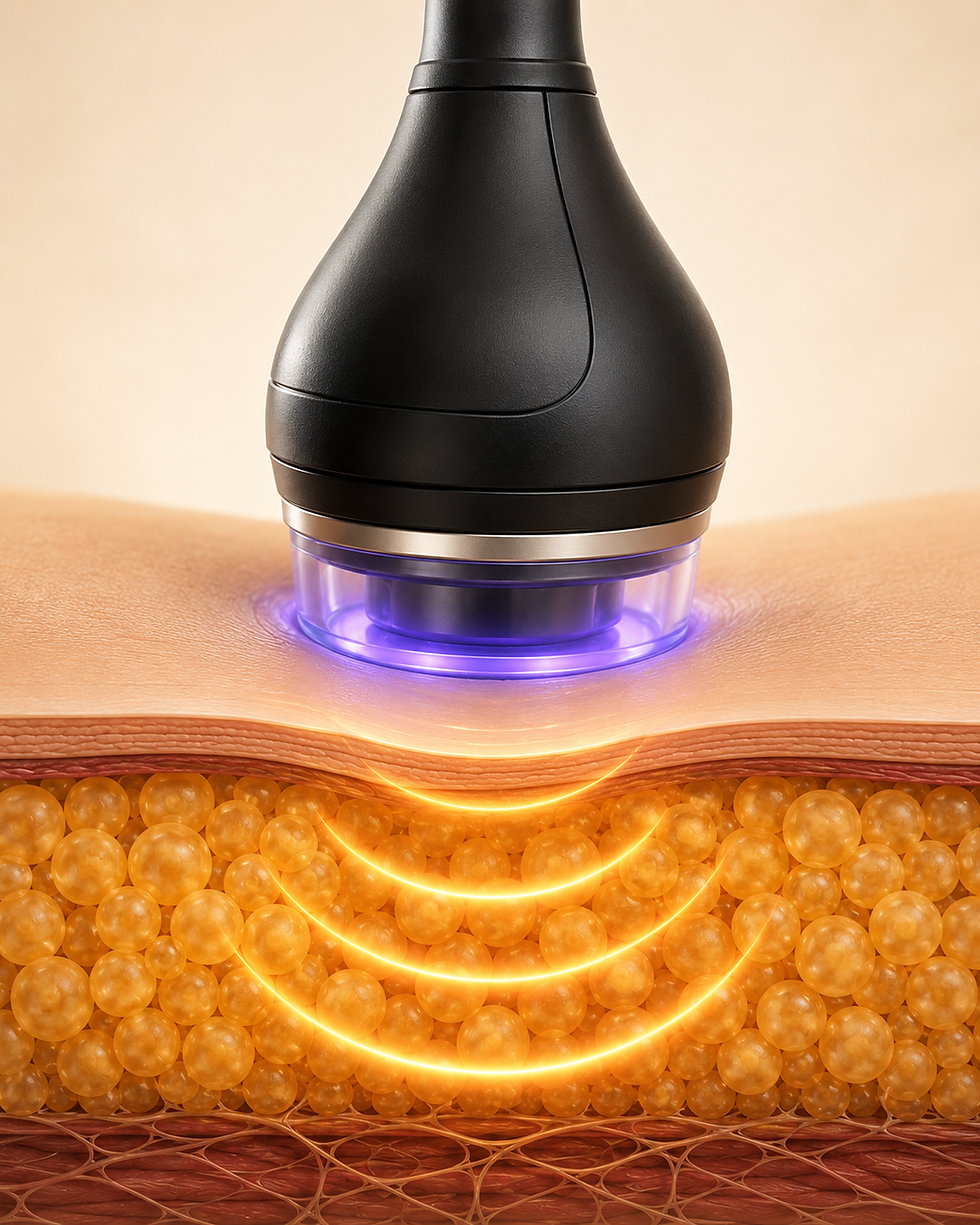
At Harmony Health Clinic, body sculpting is delivered through ultrasonic cavitation, sometimes called Cavi-Lipo. Here's how it works, in plain terms:
Ultrasound waves create tiny bubbles inside targeted fat cells, causing them to rupture.
The body naturally flushes the released fat through the lymphatic system over the following days.
Common treatment areas include the lower abdomen, waist, flanks, hips, thighs, and upper arms.
Sessions run about 20 to 30 minutes per area, and most treatment plans call for a minimum of eight sessions.
It's non-invasive: no needles, no incisions, and no downtime.
Cavi-Lipo works best on people who are already close to their goal weight but have one or two areas that don't respond to diet and exercise, a frustration many Naples retirees notice after the pool and beach season starts back up.
Medical Weight Loss: Addressing the Root Cause
Medical weight loss looks at the bigger picture: hormones, blood sugar regulation, thyroid function, sleep, stress, and nutrition. Rather than treating a stubborn area, it treats the systems driving overall weight gain.
According to the Institute for Functional Medicine, lasting weight management typically requires addressing insulin resistance, chronic inflammation, and lifestyle factors together, not diet alone. The NIDDK, part of the National Institutes of Health, similarly notes that effective obesity treatment usually combines nutrition changes, physical activity, and, for some patients, medication.
At Harmony Health Clinic, medical weight loss falls under our functional medicine services. A plan may include comprehensive lab testing, personalized nutrition counseling, and, when appropriate, GLP-1 medications like semaglutide. Physician and functional medicine advocate Mark Hyman, MD has cautioned that GLP-1 medications work best when paired with efforts to preserve muscle mass and address the root metabolic drivers of weight gain, not used as a standalone fix.

How Do You Know Which One You Need?
This is where most of the confusion clears up once you ask one simple question: are you trying to lose weight overall, or reshape an area that's already close to where you want it?
If you have more than 15 to 20 pounds you'd like to lose, or you suspect hormones, blood sugar, or thyroid issues are working against you, medical weight loss is the more appropriate starting point. If your weight is already stable and you're dealing with one or two stubborn pockets that haven't budged despite consistent exercise, body sculpting is designed for exactly that.
A Quick Self-Check - Ask yourself these questions:
Has your weight been stable for the last three to six months?
Is your concern about one specific area rather than your overall size?
Have you already ruled out (or addressed) hormonal or metabolic issues?
If you answered yes to all three, body sculpting is likely the better fit. If you answered no to any of them, a medical weight loss evaluation should come first.
Can You Combine Body Sculpting and Medical Weight Loss?
Yes, and for many patients this sequencing works best. A common path looks like: complete a medical weight loss program to reach a stable, healthy weight, then use body sculpting to address specific areas that remain resistant to fat loss.
The Cleveland Clinic notes that body contouring candidates should be at or near their goal weight for the best, longest-lasting results, which is exactly why sequencing matters. Trying to sculpt before your weight has stabilized can mean redoing the work later.
Curious how the two technologies compare directly? Harmony Health Clinic has also written about Cavi-Lipo vs. CoolSculpting and why diet and exercise still matter after body sculpting, both useful reads if you're weighing your options.
How Does This Play Out for Naples and Collier County Patients?
Southwest Florida has its own rhythm, and it shapes when patients pursue each treatment.
Snowbird season (November through April): Many part-time residents want visible results before returning north, which often means starting medical weight loss well before the holidays so results have time to show.
Off-season (May through October): Florida's heat and humidity make outdoor activity harder, which can stall weight loss progress and is a common reason patients restart a program mid-summer.
Beach and boating culture: Patients in Old Naples, Pelican Bay, Marco Island, and Bonita Springs often come in specifically ahead of Gulf Coast boating season wanting targeted sculpting rather than a full weight loss overhaul.
Hurricane season stress: Cortisol from storm prep and disrupted routines can worsen insulin resistance, another reason a functional medicine work-up matters before assuming a treatment plan will work in isolation.
Harmony Health Clinic sees this pattern every season and adjusts scheduling and plans accordingly, since a one-size-fits-all calendar doesn't work for a community with this much seasonal turnover.
Frequently Asked Questions
Is body sculpting the same thing as losing weight?
No. Body sculpting reshapes localized fat pockets in patients already near their goal weight. It is not designed to produce significant overall weight loss, and most providers, including the FDA, classify it separately from weight-loss treatments.
Should I lose weight before getting body sculpting?
In most cases, yes. Body sculpting works best on patients who are within a healthy, stable range of their goal weight. If you have significant weight to lose, a medical weight loss evaluation is typically the better first step.
Can I combine medical weight loss and body sculpting?
Yes. Many patients complete a medical weight loss program first to reach a stable weight, then use body sculpting afterward to refine stubborn areas. This sequence generally produces longer-lasting, more satisfying results than either treatment alone.
How many body sculpting sessions will I need?
Most treatment plans at Harmony Health Clinic start with a minimum of eight sessions per treatment area, each lasting 20 to 30 minutes. Many patients notice initial changes around session five, though timelines vary by individual.
Is medical weight loss covered by insurance?
Coverage varies widely by provider and plan, especially for medications like semaglutide. Harmony Health Clinic can review your specific situation during a consultation and walk you through available options.
What Should You Do Next?
If you're still not sure which path fits your goals, that's a completely normal place to start. The team at Harmony Health Clinic can review your health history, current weight, and goals to recommend whether medical weight loss, body sculpting, or a combination makes the most sense. Browse more patient stories and tips on our weight loss blog, then book a consultation to get a plan built around your body, not a generic package.
Disclaimer: This article is for informational purposes only and does not constitute medical advice. Always consult with a licensed healthcare professional for diagnosis and treatment.


