
Curious About Carnivore Diet? How To Start Safely

Key Takeaways
The carnivore diet is the strictest form of low-carb eating — only animal foods, no plants, grains, or sugar.
Some people report short-term weight loss, steadier energy, and calmer symptoms, but long-term research is limited and the quality of evidence is low.
The most common risk is a rise in LDL ("bad") cholesterol, along with possible nutrient gaps, constipation, and kidney strain.
It works best as a short-term elimination trial with baseline lab work and follow-up testing — not a forever diet you start alone.
People with kidney disease, high cholesterol, heart disease, or gout, and anyone pregnant or on daily medication, should talk to a clinician first.
Maybe you saw a podcast where someone swears that ribeyes cured their brain fog. Maybe a friend at the Pelican Bay pickleball courts lost 15 pounds eating nothing but meat and eggs. The carnivore diet is everywhere right now, and the promises are bold.
So here's the honest version. The carnivore diet can help some people in the short term, and cutting ultra-processed junk is almost always a win. But it's also extreme, under-studied, and carries real risks — especially for the heart and kidneys. Whether it's right for you depends on your labs, your history, and your goals.
This guide walks you through what the diet is, what the science actually says, how to start it the safe way, and who should steer clear. At Harmony Health Clinic in Naples, we'd rather help you test an approach with real data than guess.
What is the carnivore diet?
The carnivore diet is an eating plan that includes only animal foods — meat, fish, eggs, and animal fats — and removes all plants, grains, and sugar. It is the most restrictive form of a low-carb diet. Supporters use it for weight loss and to quiet symptoms like bloating or joint pain, though long-term research is still limited.
The modern version was popularized by Dr. Shawn Baker, and according to a registered dietitian at Cleveland Clinic, it works by taking your carbohydrate intake down to nearly zero. That's a big swing from the standard plate, which usually builds around vegetables, fruit, and grains.
Think of it as an elimination diet taken to its furthest point. Instead of removing one or two suspect foods, you remove every plant at once and live on animal products alone.
What can you actually eat on the carnivore diet?
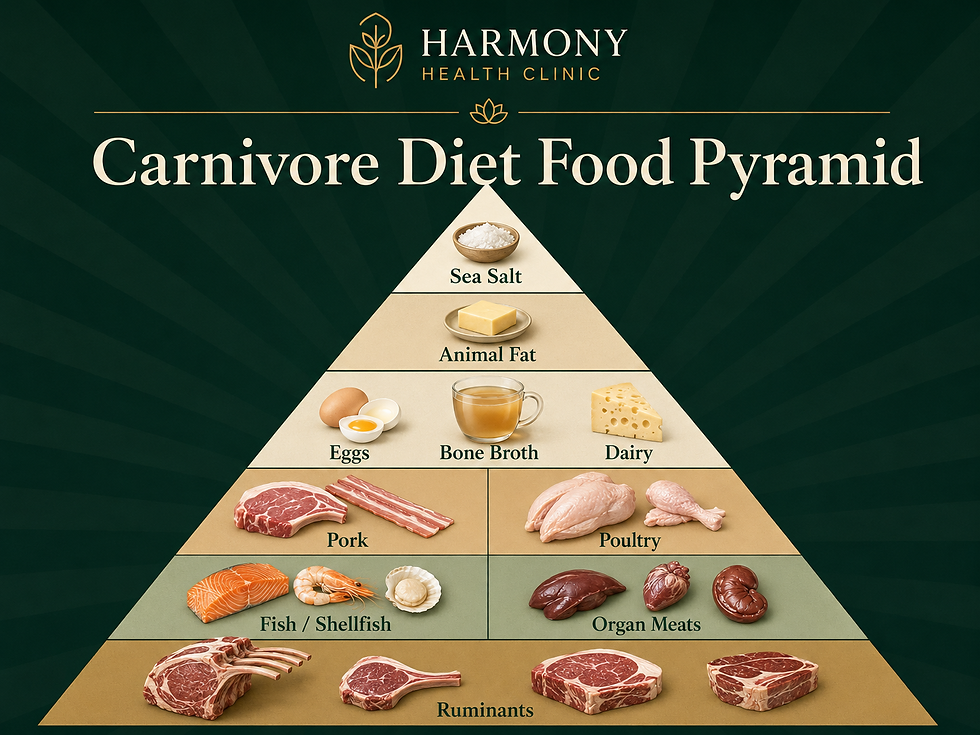
Foods most people eat
Red meat: beef, lamb, bison, pork (ribeye and ground beef are staples for the fat content)
Poultry: chicken and turkey
Fish and seafood: salmon, sardines, shrimp, and other fatty fish
Eggs
Organ meats: liver and others (often encouraged to fill nutrient gaps)
Animal fats: butter, tallow, ghee, lard
Bone broth and plenty of water and salt
Foods you cut out
All vegetables, fruit, and legumes
Grains, bread, pasta, and rice
Nuts, seeds, and plant oils
Sugar and most processed foods
The dairy question
Some people add limited dairy like hard cheese, heavy cream, or butter and feel fine. Others find dairy triggers bloating or cravings and drop it. The strictest version — sometimes called the "lion diet" — limits you to ruminant meat (beef, lamb), salt, and water, and is usually used as a short, aggressive elimination test.
Does the carnivore diet really work?
This is where honesty matters. The diet has loud fans and dramatic before-and-after stories, but the research is thin.
The most-cited data is a 2021 Harvard-affiliated survey of 2,029 carnivore dieters. On average they'd eaten this way for about 14 months, and most reported few side effects, high satisfaction, and improvements in weight and energy. That sounds impressive — but the study relied on self-reported answers from people recruited through online carnivore communities, who were already fans. It can't prove the diet caused those results.
A more cautious picture comes from a 2025 scoping review in the National Library of Medicine, which pooled the available human studies. It found possible short-term benefits like weight loss and reduced hunger, but flagged real risks — nutrient deficiencies and rising cholesterol — and concluded the overall evidence is very limited and that long-term carnivore eating cannot currently be recommended.
So the fair summary: some people genuinely feel better, often because they've cut sugar and ultra-processed food. That doesn't mean an all-meat diet is the only way to get there, or that it's safe for everyone long-term.
How do you start the carnivore diet?
If you and your clinician decide a trial makes sense, here's a sensible, lower-risk way to begin.
Step 1: Get baseline labs first
Before you change anything, know your numbers. A simple panel of advanced lab testing — lipids (LDL, HDL, triglycerides), blood sugar and HbA1c, kidney markers, and key nutrients — gives you a "before" snapshot. Without it, you're flying blind, and you won't know whether the diet is helping or quietly hurting you.
Step 2: Choose your version
Decide whether you're doing a flexible carnivore plan (meat, eggs, fish, dairy) or a strict elimination version. For a first try, most people do better starting flexible, then tightening only if needed.
Step 3: Transition over a few days
You can quit carbs cold turkey, but easing down over three to five days is gentler. Build meals around fatty cuts so you feel full, eat to satisfaction rather than counting, and salt your food well.
Step 4: Plan for the adaptation phase
As your body shifts from burning carbs to fat, you may feel tired, headachy, or irritable for several days to a couple of weeks — often called the "keto flu." The fix is usually fluids and electrolytes (sodium, potassium, magnesium).
This matters more here than almost anywhere. A very low-carb diet makes you shed water and minerals quickly, and our Gulf Coast heat and humidity already pull fluids out of you — especially for snowbirds golfing in season or anyone working outdoors. Dehydration and cramping sneak up fast in Naples summers, so hydration isn't optional. A registered dietitian at Cleveland Clinic notes that the lack of plant foods can cause electrolyte imbalances that lead to muscle cramps, dizziness, and fatigue.
What are the real risks of the carnivore diet?
This is the part the highlight reels skip. None of these are reasons to panic, but they are reasons to be monitored.
Your cholesterol may climb
This is the big one. On a meat-heavy, high-saturated-fat diet, LDL ("bad") cholesterol often rises, even as HDL and triglycerides improve. The American Heart Association links high LDL to heart disease risk, which is why this can't be ignored.
There's an active scientific debate here. A 2025 KETO-CTA trial in JACC: Advances followed lean, metabolically healthy low-carb dieters with very high LDL and found that, over one year, their LDL level didn't predict artery plaque growth — existing plaque did. That's interesting, but it studied a narrow, hand-picked group, ran only a year, and still showed some plaque progression. It's not a green light for the average person to shrug off a rising LDL. The smart move is simple: test your lipids and watch the trend. If your numbers head the wrong way, we can help you lower your cholesterol naturally or adjust the plan.
You'll get zero fiber
Meat has no fiber, and that can lead to constipation for some people. It also changes the food supply for your gut bacteria, which is still poorly understood.
Nutrient gaps are possible
That 2025 scoping review specifically flagged the risk of running low on vitamin C, vitamin D, calcium, magnesium, and iodine over time. Organ meats and the right supplements can help close gaps, but this needs to be planned, not assumed.

Kidneys and other concerns
A diet very high in animal protein can put added stress on the kidneys, and a 2025 study in the American Journal of Clinical Nutrition examined a higher risk of kidney stones. High red-meat intake has also been associated with colorectal cancer risk in population research. These are long-term considerations that depend heavily on your personal health history.
Who should not try the carnivore diet?
This diet isn't a fit for everyone, and for some people it's genuinely risky. Be especially cautious — and get medical guidance first — if you:
Have kidney disease or a history of kidney stones
Have high cholesterol, heart disease, or a strong family history of it
Have gout or high uric acid
Are pregnant or breastfeeding
Take daily medication for blood pressure, blood sugar, or cholesterol — your dose may need adjusting by your prescriber, because low-carb eating can change these numbers quickly
Have a history of disordered eating, where a highly restrictive plan can do more harm than good
The smarter way: use carnivore as a tool, not a religion
Here's how we tend to think about it in functional medicine. The most useful thing about the carnivore diet usually isn't the meat — it's the removal. Stripping the diet down to one food group can quiet inflammation and reveal which foods were causing problems. That's the logic behind elimination diets, and it can be valuable for people wrestling with stubborn gut issues or autoimmune conditions like Hashimoto's, RA, and lupus.
But an elimination diet is a diagnostic tool with a beginning, middle, and end. You run it for a set window, track how you feel, then reintroduce foods one at a time to learn what your body actually tolerates. Most people don't need to eat steak forever — they need to find their personal triggers and build a sustainable plate around them.
That's also why doing this with support beats doing it alone. Working with nutrition counseling and lab monitoring, you can capture the upside (less inflammation, better blood sugar, fewer cravings) while catching the downside (rising LDL, low nutrients) before it becomes a problem. If your real goal is weight that won't budge, there are often gentler, more sustainable paths to get there, too.
Frequently Asked Questions
Is the carnivore diet safe?
There's limited long-term research on the carnivore diet. Some people report short-term benefits like weight loss and steadier energy, but the diet can raise LDL cholesterol, cause nutrient gaps, and trigger digestive issues. It isn't right for everyone, so check with a licensed clinician before starting.
What can you eat on the carnivore diet?
The carnivore diet includes animal foods only: beef, lamb, pork, poultry, fish, seafood, eggs, and animal fats like butter and tallow. Many people add limited dairy such as hard cheese. Strict versions, sometimes called the "lion diet," limit you to ruminant meat, salt, and water.
How long does it take to adapt to the carnivore diet?
Most people need several days to a few weeks to adjust as the body shifts from burning carbohydrates to fat. Early adaptation symptoms can include fatigue, headaches, and irritability. Staying hydrated and replacing electrolytes helps, which matters even more in Florida's heat and humidity.
Does the carnivore diet raise cholesterol?
For many people, yes. LDL cholesterol often rises on a meat-heavy, low-carb diet, while HDL and triglycerides may improve. Because the American Heart Association links high LDL to heart disease risk, it's wise to test your lipids before starting and monitor them with your clinician.
Who should not try the carnivore diet?
People with kidney disease, gout, a history of high cholesterol or heart disease, certain metabolic conditions, and those who are pregnant or breastfeeding should be cautious. If you take medication for blood pressure, blood sugar, or cholesterol, talk with your prescriber first, since your needs may change quickly.
Thinking About Trying It? Let's Do It With Data.
If you're curious about the carnivore diet, don't guess your way through it. The team at Harmony Health Clinic can run baseline labs, help you structure a safe trial, and monitor your numbers so you get the benefits without the blind spots. We serve Naples, Marco Island, Bonita Springs, and all of Collier County — in person and by telemedicine across Florida. Book a visit with Harmony Health Clinic and let's build a plan around your body, not a hashtag.
Disclaimer: This article is for informational purposes only and does not constitute medical advice. Always consult with a licensed healthcare professional for diagnosis and treatment.
By Dr. Joshua Lamers, DC · Medically reviewed by Annaelle Lamers, PA-C

